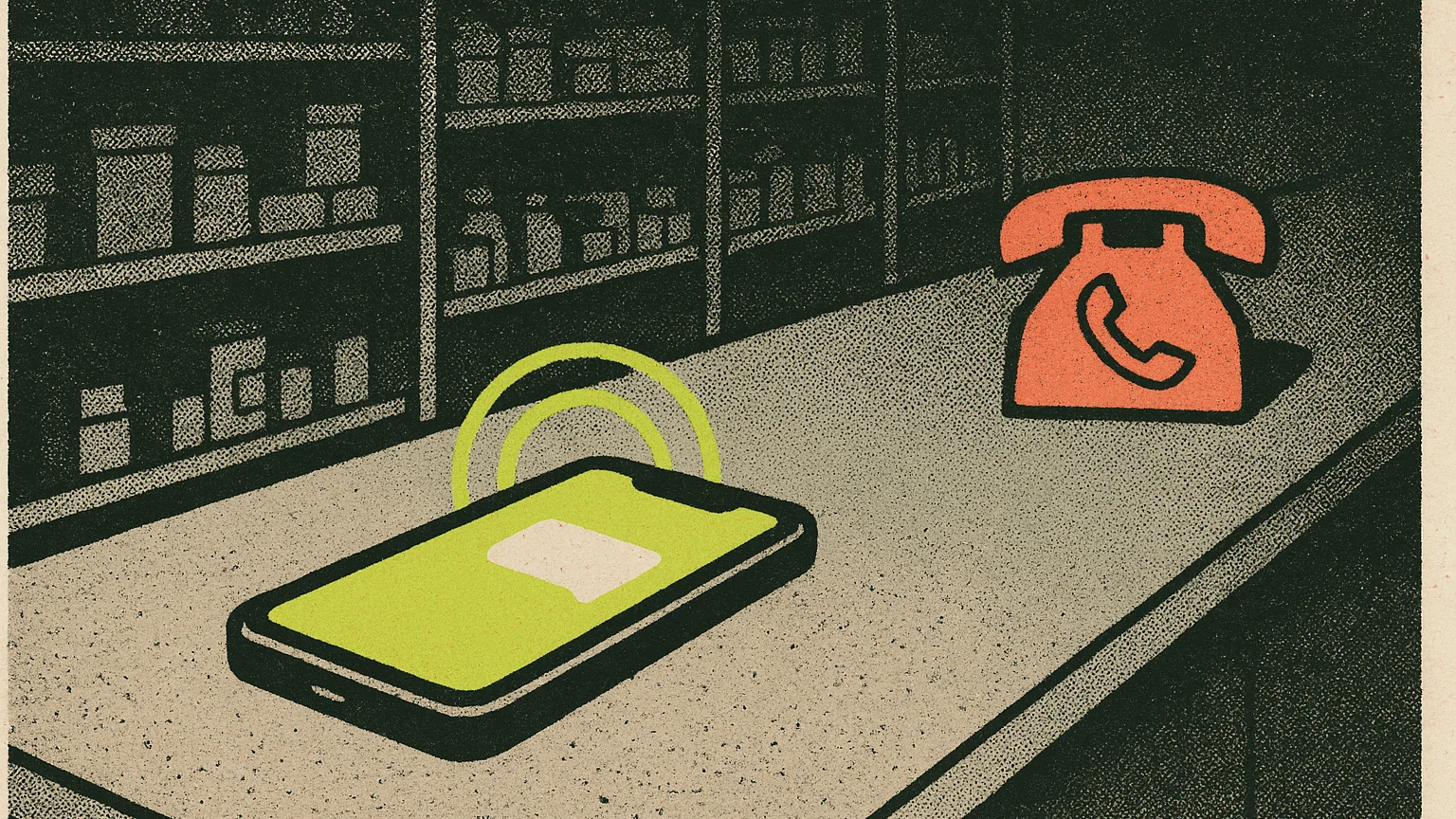
A missed call text back is an automatic text sent the instant a call to your business goes unanswered, usually some version of "sorry we missed you, here's how to reach us" with a link to call, text, or book. It's the cheapest intervention in this whole category, and for a lot of missed calls it's genuinely enough: a caller comparing a few shops sees a fast reply and waits instead of dialing the next name. What it can't do is have a conversation, ask a question, or tell a routine caller from an emergency. For most small shops it's worth trying before anything bigger. For a business where a real emergency call is common, it can quietly make things worse, not better, on the one call that actually matters.
What is a missed call text back?
An automatic text sent the moment a call goes unanswered, usually some version of "sorry we missed you, here's how to reach us." It doesn't listen to the call or know why someone rang. It fires the same message whether the caller wanted a quote or had a real emergency.
Most versions plug into a phone system, a scheduling app, or a standalone texting tool you already have, watching for an unanswered ring and firing a preset reply within seconds. There's no person on the other end and no branching logic beyond, at best, a link to a booking page or a callback number. It's a notification with a template attached, not a receptionist.
That's the whole feature. It's simple enough to set up in an afternoon and cheap enough that a lot of shops try it before considering anything with a person behind it.
Which missed calls does a text-back actually save?
The ones that were never urgent. A price-shopper comparing a few shops, or a caller who just wants a callback whenever it's convenient, is often satisfied enough by a fast text to wait instead of moving straight to the next name on their list.
Sort your missed calls by what the caller actually needed, and the picture gets clearer fast:
| Kind of missed call | What the caller needs | What a text-back does with it | Verdict |
|---|---|---|---|
| Price-shopper comparing a few shops | Confirmation you got the message before they move on | Answers before they call the next name — often enough by itself | Text-back is enough |
| Routine booking, no urgency | A callback whenever it's convenient | Buys you time without needing a live person to answer | Text-back is enough |
| New lead, unsure if you're open or available | Reassurance plus a next step | Can carry a booking link, but can't answer a question | Helps, doesn't close it alone |
| Genuine emergency — no heat, a burst pipe, no power | A person, now | Looks like a response, so the caller may wait instead of calling around | Worse than nothing |
That last row is the one worth reading twice. Everywhere above it, a text-back is either the whole answer or a reasonable stopgap. In that row, it's actively the wrong tool, and it's the row that matters most for anyone in an emergency trade.
Why can a text-back make things worse for an emergency call?
Because it looks like a response. Think about what you'd do yourself with no heat or a burst pipe. If nobody picks up, you know you've been missed, so you try the next number or call back in ten minutes. If a friendly text promises a callback, you've been given a reason to sit and wait instead of calling around for someone who can actually help right now.
That's the trap. An emergency is exactly the situation where waiting has a real cost, and the text is what made waiting feel safe. It did its job, technically, and left the caller worse off than if it had never fired.
The general after-hours math treats every missed call as either worth something or worth nothing. A text-back changes that math only for the calls where "worth something" doesn't also mean "worth answering with a person, now." For an emergency trade, that's exactly the call a text-back is worst at protecting.
What should you expect it to cost?
Less than any staffed option in this category. Text-back tools are typically sold as a small add-on inside a phone system, a scheduling app, or a standalone texting tool, not as a subscription priced like a person answering your line.
That's most of the appeal. You're not paying for judgment, triage, or a conversation, so the price reflects a notification firing on a trigger, not a service with payroll behind it. It's the honest floor of what this category can cost, and the honest floor of what it can do.
Don't buy this if…
Skip it if most of what you miss is calls that genuinely need a person on the line fast, or if you're already answering nearly everything during business hours and the after-hours gap is small. A text-back solves a specific, narrow problem, not every missed call.
Skip it too if you've already worked through the after-hours arithmetic and the number says full coverage pays for itself. A text-back is what you try when the math doesn't clear that bar yet, not a permanent substitute for it once it does.
If you're not sure which one you are, look at your last month of missed calls and count how many were genuine emergencies versus everything else. That ratio, not a vendor's pitch, tells you whether the cheapest fix is the right one or just the first one you tried.
Does it really deliver on the promise every vendor makes?
Not the way the ads say it. A text-back doesn't stop calls from going unanswered. It sends a fast, automatic reply after the fact, which is a real and useful thing, just a much smaller one than the marketing implies.
The calls still go unanswered. What changes is what happens in the next thirty seconds: instead of silence, the caller gets a template. For a caller who wasn't in a hurry, that's most of the value a much more expensive service would have delivered anyway. For a caller who was, it's a promise the text can't keep.
Sources
- Quo Pricing | Get started with a Free Trial — Quo (formerly OpenPhone), accessed 2026-09-07
- Automatic Text Response for Small Businesses - Grasshopper — Grasshopper, accessed 2026-09-07
- Voice Settings Overview | Housecall Pro Help Center — Housecall Pro Help Center, accessed 2026-09-07