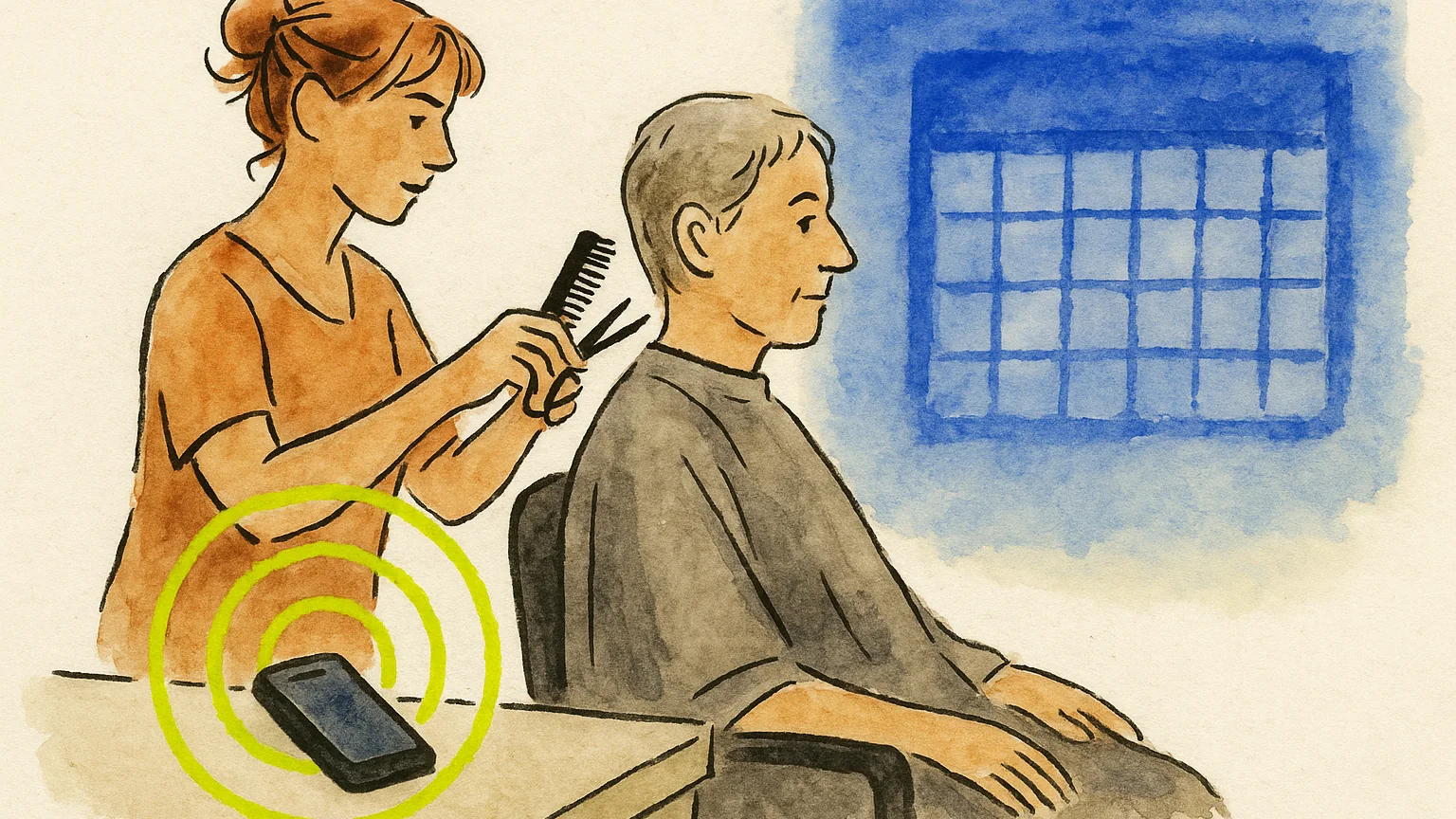
A salon virtual receptionist is answering a scheduling question, not an emergency. Every call into a salon carries a known dollar value already attached to it: a cut, a color appointment, a rebooking, a no-show trying to get back on the books. None of it sorts into "urgent" the way a burst pipe or a smoking outlet does. Because there's no emergency to triage, the decision that actually matters is narrower: can the thing answering the phone see your calendar and move something on it while the caller is still on the line, or does it just take a message and leave someone who wanted a new time waiting for a callback. Triage was never the question here. The book was.
What makes a salon virtual receptionist different from an answering service for a trade?
The trades on this site build around an emergency that lands once and needs sorting. A salon virtual receptionist has no emergency to sort. Every call is a calendar transaction with a value already attached, a booking, a rebooking, a no-show, so the entire decision comes down to whether it can touch that calendar.
That's the inverse of a plumber's 2am call, where the book is irrelevant and getting a real emergency in front of someone fast is everything. Answering Service for Plumbers is the same category of purchase, decided by a completely different set of questions. Nothing on a salon's phone needs speed. It needs the schedule.
Does it matter whether a salon calls this a receptionist or an answering service?
Not to what it needs to do. "Virtual receptionist," "AI receptionist," and "answering service" describe the same purchase decision under three different names, and salons increasingly hear the first two. The capability question underneath doesn't move: can it see the calendar and write to it, or not.
A vendor calling itself a receptionist instead of an answering service hasn't necessarily changed what's inside the box. Ask the same question regardless of the label on the pricing page: does it read the actual schedule live, or does it take a message and hand it to someone else to enter later. The name answers nothing.
What does a salon virtual receptionist actually need to get right?
Reading and writing the actual book. It has to see which chair is open when, know which service a caller means, and move or add an appointment on the call itself, including catching a walk-in slot or filling a cancellation before it sits empty.
Three things happen inside that one requirement. A regular calls to move a color appointment, and the answer has to hold in real time, not arrive as a callback an hour later. A no-show from last week gets a chance to rebook before the slot goes cold. A caller asking "do you have anything today" gets checked against the real gap in the schedule, not a guess. You already know how often that call comes in.
What happens when a booking call goes unanswered?
Nothing dramatic that day. A caller who wanted a new time has every reason to call the next salon, and a stylist's open slot that could have been filled with a walk-in stays empty instead, with no complaint attached to explain why the chair sat open.
There's no burst pipe here, no flooded basement, no story to tell afterward. There's a chair, a color kit already pulled for someone who never called back, and a slot nobody filled.
Where's the break-even for a salon?
Lower than it looks, because a salon's ticket sizes are small but frequent, and the service is worth it once the chair-time it protects each month clears its own cost. Run your own numbers through the table below rather than trusting an industry average.
Here's the arithmetic, worked through once with example numbers, not a published figure. Like the recurring trades on this site and unlike a single emergency ticket, a lost salon client keeps costing you every visit cycle they would have kept booking, so this is a monthly recurring loss, not a one-time hit:
| Missed booking calls/month | Avg. ticket value | Share who don't call back | Revenue at risk/month |
|---|---|---|---|
| 5 | $65 | 1/3 | $108 |
| 10 | $65 | 1/3 | $217 |
| 8 | $120 | 1/4 | $240 |
| 15 | $120 | 1/4 | $450 |
Run your own chair count and average ticket through the same table. Compare the result against a monthly subscription cost, not against a single job the way the emergency trades do. A salon's exposure is a string of small transactions, not one large ticket.
Don't buy this if…
Skip it if you already run booking software that lets clients reschedule themselves without calling, or if someone at the desk is free to pick up often enough that the phone rarely goes unanswered during business hours. You already know whether that someone is a receptionist or you, with a client in the chair. A tool that reads a calendar you've already automated is money spent twice.
Skip it too if most of a missed call's value belongs to a one-time visitor rather than a repeat guest. The arithmetic above assumes rebooking value, and a single tourist cut doesn't carry the weight of a color client on a six-week cycle. And if the actual problem is job-site or after-hours emergency coverage, this isn't that page: the plumbing decision or the after-hours math are built for that instead.
Sources
- Manage booking cancellations and prepayment policies | Square Support Center — Square, accessed 2026-09-14
- No-Show Protection - Your time, respected. Your money, guaranteed — Booksy, accessed 2026-09-14
- How to protect your business from no-shows and late cancellations — Fresha, 2022-03-15