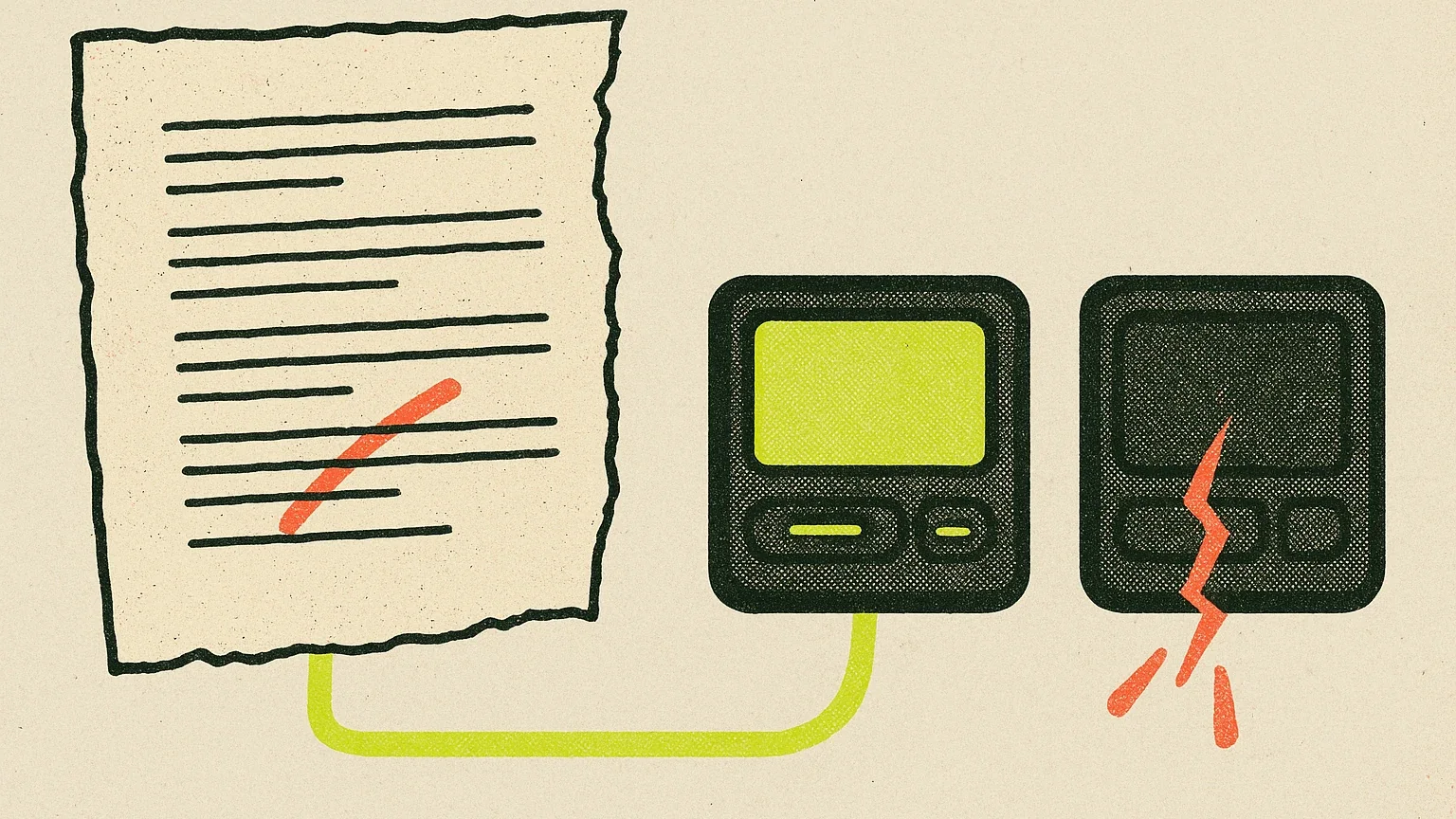
An emergency call answering service is supposed to guarantee one thing: a caller in real trouble reaches a person, fast, every time. That's not what "24/7 emergency answering" means on most vendor pages. The phrase can cover a live transfer inside thirty seconds, a page to an on-call number nobody is required to answer in real time, or a message flagged urgent and read whenever the queue gets to it. Those are different products sold under one label, and the gap only shows up the first night an emergency tests it. The contract, not the marketing copy, is where "emergency" gets defined. If your vendor's agreement doesn't name who gets paged, how fast, and what happens if they miss it, you don't have an emergency service. You have a phrase.
What does an emergency call answering service actually promise?
On paper, an escalation: a call flagged as an emergency gets routed to a real person fast, not filed as a message for the morning. In practice the promise is only as real as the contract behind it. The phrase alone doesn't say who gets paged, how quickly, or what happens when they don't pick up.
Every vendor in this category advertises some version of the same four words. What sits behind them varies more than almost anything else this site has looked at, because "emergency answering" costs a vendor nothing to print and a great deal to actually staff. The general after-hours math treats every missed call as worth something or worth nothing. This page is about a narrower question: once you've decided a call is worth catching, what does the vendor actually owe you when it comes in flagged as urgent.
What does "emergency" mean on the vendor's own page, before you sign?
Whatever gets the deal closed, and most vendors aren't lying so much as staying vague on purpose. The same word covers a live agent transfer inside seconds, a page to an on-call number nobody is required to answer right away, a callback promised within an hour, and a message simply flagged urgent and read in order.
Those four things cost a vendor wildly different amounts to deliver, which is exactly why the sales page rarely says which one you're buying. A live transfer needs a staffed line at 3am. A page to an on-call number needs a piece of software and no staffing commitment at all. Someone else, on your side, still has to actually answer it. A flagged message needs almost nothing. Read from the outside, all four look like the same checkbox next to "24/7 emergency answering." Read from the contract, only one of them is worth paying an emergency premium for.
What questions turn a vague emergency promise into a contractual one?
Six of them, and every one belongs in the contract, not the sales call: who gets paged, how a call gets flagged as an emergency in the first place, how long before it escalates, what happens if nobody answers, what the caller hears meanwhile, and whether any of it is already in your price or sold as an extra.
Ask them in this order and a vendor's answer, or its absence, tells you which of the four products above you're actually looking at:
| Question to ask | What a real contract answer sounds like | What a dodge sounds like |
|---|---|---|
| Who gets paged when a call is flagged emergency? | A named on-call rotation, your own staff or subs, in the order you set | "Our team escalates as needed" |
| How does a call get flagged as an emergency at all? | A fixed script or keyword list you approved, applied the same way every time | "Our agents use their judgment" |
| How long before an unanswered page escalates to the next contact? | A number of minutes, written down, with a named next step | "As soon as possible" |
| What happens if nobody in the rotation answers? | A second and third contact, and a defined point where the caller is told the truth | No answer; the contract stops after step one |
| What does the caller hear while this is happening? | A live person staying on the line, or a specific callback time | Hold music, or a vague "someone will call you back" |
| Is the escalation guarantee in your base price or a paid add-on? | Named in the plan, or priced separately, in writing | Bundled into the marketing copy with no line item anywhere |
A vendor that answers all six in writing is selling you an actual product. One that answers with reassurance instead of specifics is selling you the phrase.
What happens when the on-call person doesn't pick up?
That's the exact point where most emergency-answering promises quietly stop. A real escalation clause names a second and third contact and a maximum number of attempts before anyone tells the caller the truth. A vague one ends at step one, with the call sitting in a queue nobody is required to check again.
This is the single most common gap in this category. A vendor can genuinely deliver "we'll page your on-call number" and still leave you exposed, because paging is not the same as reaching someone. If the contract doesn't say what happens after the page goes unanswered, assume the answer is nothing.
What does the caller hear while the escalation is happening?
Either a live person who stays on the line, or a specific callback time, not a vague reassurance. A caller in the middle of an emergency who gets hold music or "someone will reach out" has just been handled exactly like a caller who wanted a Tuesday afternoon appointment.
That gap matters because a caller who thinks they've been helped stops calling around for someone who can actually help them. An honest "you'll hear back within fifteen minutes, and here's what to do if it's worse than that" costs the vendor nothing extra to say and tells the caller the truth about where they stand. Silence, or a message that sounds like an answer but isn't one, does the opposite.
Don't buy this if…
Skip a paid escalation guarantee if your team already staffs a direct on-call line your customers use after hours, or if you're small enough that every emergency call already reaches you personally by default. Skip it too if your current plan's fine print already names an escalation chain; a second one on top just pays twice for the same clause.
The honest version of this section is short, because the guarantee itself is cheap to ask for and usually not the reason a vendor's price goes up. Most of the time the right move isn't skipping it. It's making the vendor put in writing what you assumed you were already buying.
Does the same escalation clause work for every trade?
No. What counts as an emergency is trade-specific, and the escalation clause has to match it. A plumber's burst pipe, an electrician's hazard call, and a stranded driver waiting on a tow trigger the same contract language completely differently, because what's actually at stake on the other end of the phone isn't the same.
A plumbing shop's after-hours triage is about catching the call that closes that same night at a large ticket. An electrician's triage is about a hazard-or-not split with real safety stakes attached. A towing dispatch is about reaching a driver with a location, not an office with a message. Each of those pages names the call pattern that decides what "emergency" means for that trade. This page is the checklist that makes sure whatever your vendor calls "emergency" on its pricing page actually matches the one your business has in mind.